Jet lag has a way of making the first day of a trip feel slightly unreal. You’ve arrived, but your body is still somewhere mid-flight, wondering why it’s expected to function.
Traveling across time zones throws off your internal clock, affecting your sleep, energy, digestion, and focus. The farther you go, the more noticeable it becomes, especially when traveling east, which tends to be harder on the body than heading west.
Jet lag isn’t random. It’s your body responding to a schedule it hasn’t caught up to yet.
The good news is that once you understand what’s happening, you can work with it. A few well-timed changes before, during, and after your flight can help you settle in faster and start enjoying your trip sooner.
1. Know which direction you’re flying
Not all jet lag hits the same. Traveling east is usually more challenging because your body naturally prefers staying up later rather than falling asleep earlier.
That’s because your circadian rhythm runs slightly longer than 24 hours. In practice, it’s easier to extend your day than shorten it, which is why westward trips often feel more manageable.
2. Start adjusting before you leave
Your body clock doesn’t respond well to sudden shifts, but even a small change ahead of time can help.
In the days leading up to your trip:
- Traveling east → go to bed 30–60 minutes earlier
- Traveling west → stay up slightly later
You don’t need to fully adapt before departure, just try to narrow the gap so your body isn’t starting from zero when you land.
3. Switch to the destination’s time as early as possible
Once you board, set your watch or phone to your destination’s time zone and start operating within that schedule. If it’s nighttime where you’re headed, begin winding down. If it’s daytime, stay awake and engaged.
One of the most common mistakes is continuing to think in “home time,” which drags out the transition. The sooner your behavior matches your destination, the easier it becomes to settle in.
4. Hydrate before you feel it
Airplane cabins are extremely dry, often with humidity levels below 20 percent. That can leave you more dehydrated than you realize, which can make fatigue feel more intense.
Start hydrating before your flight so you’re not already behind. During the flight, sip water steadily rather than drinking large amounts at once.
Electrolytes can also help, especially on longer flights, since your body relies on minerals like sodium and potassium to support key functions, including your internal clock, and how your body handles travel overall.
5. Make sleeping on the plane more realistic
Sleeping on a plane isn’t always easy, but there are ways you can improve your chances.
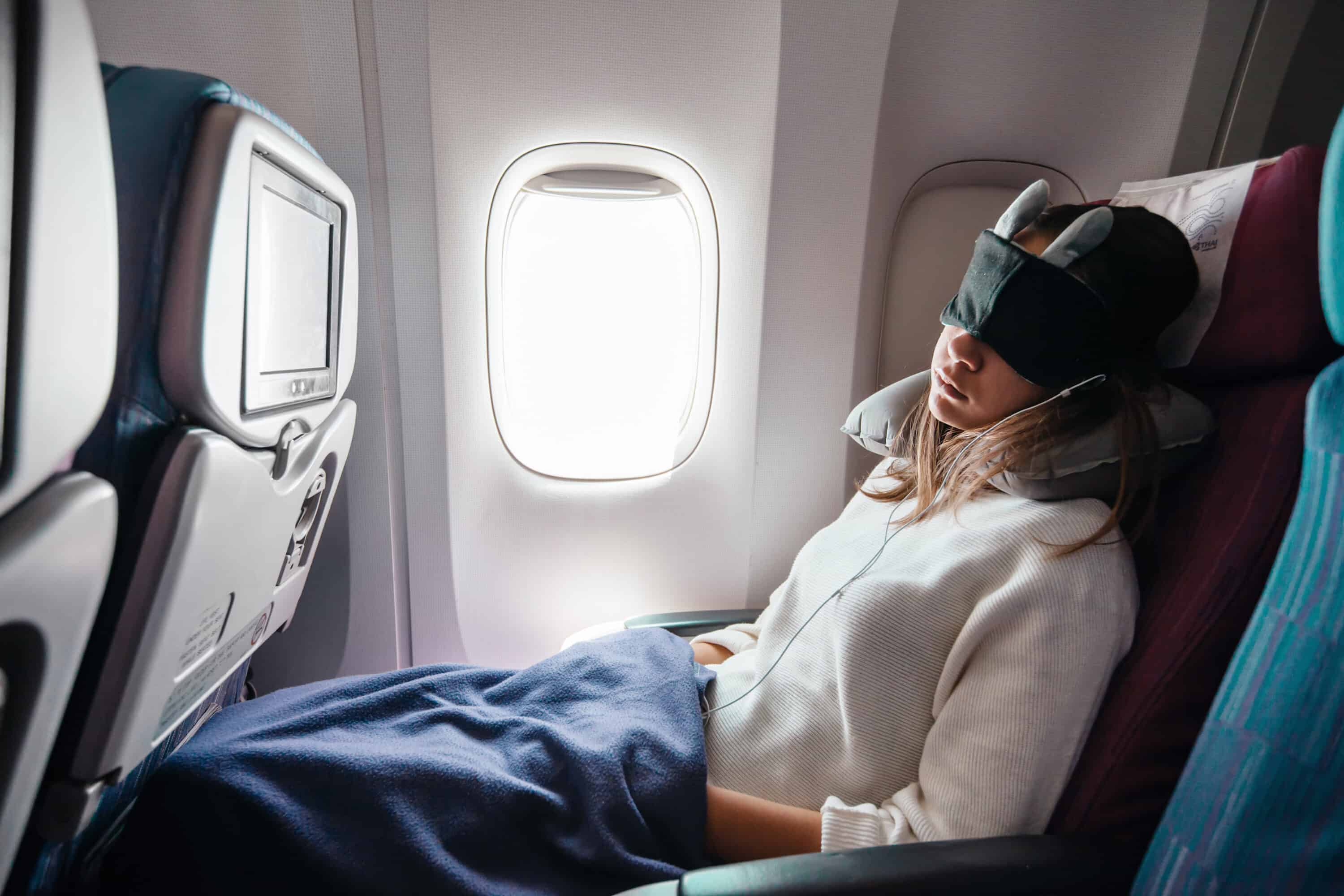
Focus less on perfect sleep and more on creating the conditions for rest. Comfortable layers, a neck pillow, and reducing noise and light can help your body settle. Even a few hours of light sleep or rest can make a difference when you land
If sleep doesn’t happen, that’s okay. Quiet rest still helps reduce fatigue and gives your body a head start on recovery.
6. Eat on local time
Your body uses food as a cue for when to be awake. Aligning your meals with your destination helps reinforce your new rhythm.
A simple way to think about it:
- Morning at your destination → lighter, energizing foods
- Midday → eat normally
- Evening → keep meals simple and sleep-friendly
Some travelers choose to skip in-flight meals and eat on arrival instead. It’s not essential, but it can help anchor your new schedule faster.
7. Use light as your strongest reset tool
Light is the most powerful signal your body uses to regulate its internal clock. When timed well, it can speed up the transition.
If you’re traveling east, prioritize morning light and limit exposure later in the day. If you’re heading west, do the opposite and seek light in the evening.
This is less about doing more and more about getting the timing right. A short walk outside in the morning or limiting bright light later in the day can help your body recognize when it’s time to be alert and when it’s time to wind down.
8. Move your body, gently
After a long flight, your body tends to feel stiff and heavy, which can amplify fatigue. Gentle movement helps improve circulation and wake your body up.
Stretch during the flight when possible, then aim for light activity after you land. A walk, short yoga session, or time outside can help you feel more alert without overexerting yourself.
9. Keep naps short and controlled
The arrival nap is tempting, but long naps can make it harder to fall asleep later.
If you need rest:
- Aim for 20–30 minutes
- Try to nap earlier in the day
10. Give your body time to catch up
Jet lag doesn’t resolve instantly. A general rule of thumb is that it takes about one day per time zone crossed to fully adjust, though eastward travel can take longer.
If your trip includes something important, like a wedding, a big meeting, or a concert, arriving early gives your body time to adapt and gives you a margin for anything unexpected, from delays to a rough first night, and needing to speak with a doctor while you’re away.
Tools that can help you adjust faster
If you want to take a more structured approach, here are a few tools that can make the process easier:
- Timeshifter: Creates a personalized jet lag plan based on your flight and sleep habits, with prompts for when to sleep, seek light, or have caffeine
- Entrain: Offers similar guidance using light exposure schedules tailored to your trip
- Sleep trackers (Oura, Fitbit): Help you monitor recovery and understand how your body is adjusting
- Eye masks and earplugs: Useful both on the plane and at your destination for better sleep
- Electrolyte packets: Help support hydration and recovery during long flights
A simple jet lag game plan
All of these tips work best together. Instead of trying to remember everything mid-flight, think of jet lag as a sequence:
Before your trip
- Shift your sleep schedule slightly
- Start hydrating early
On the plane
- Switch to destination time
- Sleep or stay awake based on arrival
- Limit alcohol and caffeine
After you land
- Get light at the right time
- Eat on local time
- Move your body
- Keep naps short
None of this has to be perfect. The goal is to give your body consistent signals so it can catch up.
Travel better from the moment you land
Jet lag may be part of long-haul travel, but it doesn’t have to take over the first few days. With a bit of planning and the right habits in place, you can help your body adjust faster and start feeling like yourself sooner.
Faye is designed to support you through the moments that don’t go exactly as planned, with 24/7 assistance, digital claim filing, and approved reimbursements sent straight to your phone’s wallet. So while you focus on adjusting to your new time zone, you’ll still have what you need in place if anything else comes up.
The products and websites mentioned are suggestions only. Faye is not affiliated with them. This post is intended to provide ideas for overcoming and preventing jet lag when traveling.
FAQs: jet lag tips, sleep, and travel timing
What is the fastest way to get over jet lag?
The fastest way to get over jet lag is to align your sleep, light exposure, meals, and activity with your destination as soon as possible. Starting before your trip and staying consistent after you land can shorten how long it takes your body to adjust.
How long does jet lag usually last?
Jet lag typically lasts about one day per time zone crossed. Eastward travel can take longer because your body has to adjust to an earlier schedule.
Is it better to sleep on the plane or stay awake?
It depends on when you land. If you arrive in the morning, sleeping on the plane can help you start the day on local time. If you arrive in the evening, staying awake may make it easier to fall asleep later.
Does drinking water help with jet lag?
Drinking water won’t reset your internal clock, but it can reduce dehydration, which often makes jet lag symptoms feel worse.
Does melatonin help with jet lag?
Melatonin can help some travelers adjust their sleep schedule, especially after long-haul flights. It usually works best when taken close to your intended bedtime.
Is it okay to nap after a long flight?
Short naps can help, but long naps can delay your adjustment. If you need rest, keep it to about 20–30 minutes and avoid late-day naps.