
Travel insurance can feel complicated, especially when pre-existing medical conditions are part of the equation. This guide walks through what counts, how coverage works, and what to check before your trip so you can make informed decisions.
Pre-existing conditions and travel insurance: quick answers
Do pre-existing medical conditions affect travel insurance?
Yes. Most travel insurance plans exclude pre-existing conditions by default, which means related cancellations, interruptions, or medical events may not be covered unless you qualify for a waiver.
What is a pre-existing medical conditions waiver?
A pre-existing medical conditions waiver removes that exclusion, allowing eligible travelers to access coverage for trip cancellations and interruptions tied to an existing condition, as long as plan requirements are met.
How do you qualify for a waiver?
Most travel insurance plans, including those offered by Faye, require you to purchase your policy within 14 days of your initial trip deposit and be medically able to travel at the time of purchase, though requirements can vary slightly by state and plan.
What happens if you don’t qualify for a waiver?
If you don’t meet the requirements, pre-existing medical conditions are generally excluded from coverage. That means any claims related to that condition may not be reimbursed.
Does travel insurance cover stable conditions?
In some cases, yes. If a medical condition has remained stable without changes to treatment or medication during the lookback period, it might not be considered pre-existing under certain plans.
Does travel insurance cover pregnancy?
Some plans cover unexpected pregnancy-related complications while traveling. Routine care or known events are usually not covered, so it’s worth reviewing your plan details.
Why pre-existing condition coverage matters
Travel rarely goes exactly as planned. If you’re managing a medical condition, the financial risk can be higher than expected.
Emergency care abroad, in particular, can be costly. For example, medical evacuations from Europe can range from $65,000 to $90,000 depending on distance and level of care, and your primary health insurance provider may not cover those expenses.
Having the right travel insurance coverage in place helps reduce that risk and gives you a clearer path forward if plans change.
What counts as a pre-existing condition for travel insurance?
A pre-existing condition is generally defined as any illness, injury, or medical condition that required treatment, medication, or evaluation within 180 days before you purchased your policy.
This can include situations where:
- You were advised to undergo a test, exam, or treatment for symptoms or a condition
- You were prescribed medication
- Your medication dosage or frequency changed due to the condition worsening
Note: If a condition is stable and managed without changes to medication during that 180-day period, it may not be considered pre-existing under certain plans.
What is the 180-day lookback period?
The 180-day lookback period refers to the timeframe before purchasing your travel insurance policy during which medical activity is reviewed. If a medical condition was treated, evaluated, or changed during this period, it may be considered pre-existing and excluded from coverage unless you qualify for a waiver.
Does travel insurance cover pre-existing conditions? (and when it doesn’t)
Most travel insurance plans don’t automatically cover pre-existing conditions. However, many offer a pre-existing medical conditions waiver that can remove this exclusion if certain requirements are met.
With Faye, this waiver is available to eligible travelers, provided you:
- Purchase your policy within 14 days of your initial trip deposit
- Be medically able to travel at the time of purchase
The best part? There’s no age restriction or extra cost for this waiver—it’s automatically included in your Faye policy if you qualify.
With vs. without a waiver
Without a waiver:
- Pre-existing conditions are generally excluded
- Related cancellations or interruptions may not be covered
With a waiver (if eligible):
- Pre-existing conditions can be covered
- You have broader financial protection if plans change
How to file a claim for a pre-existing condition
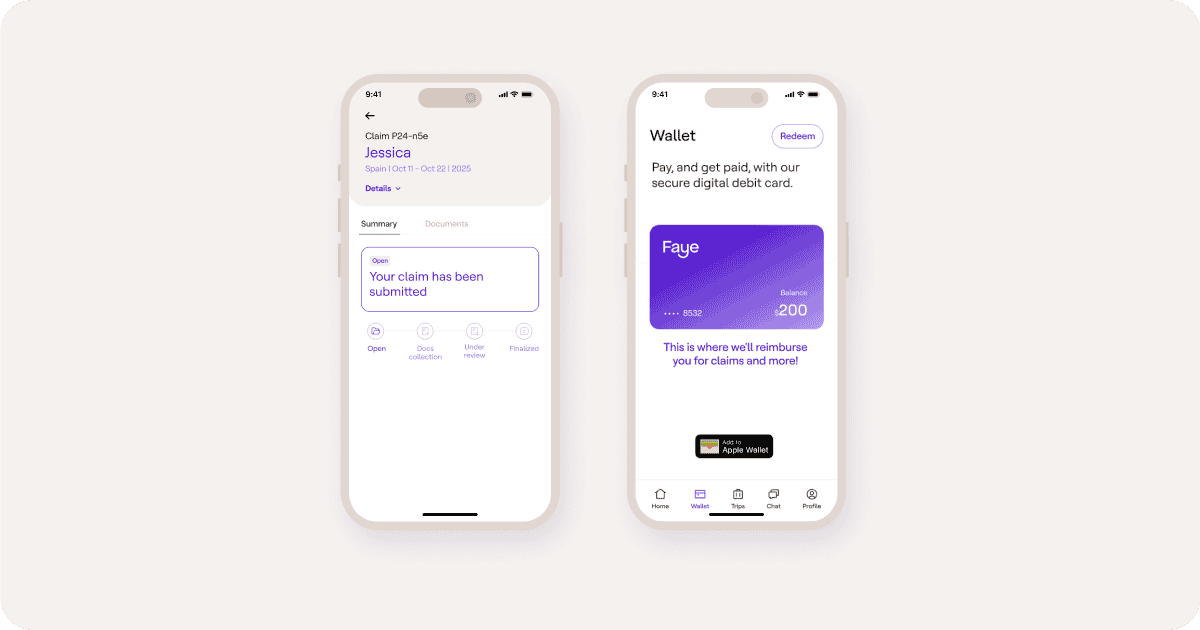
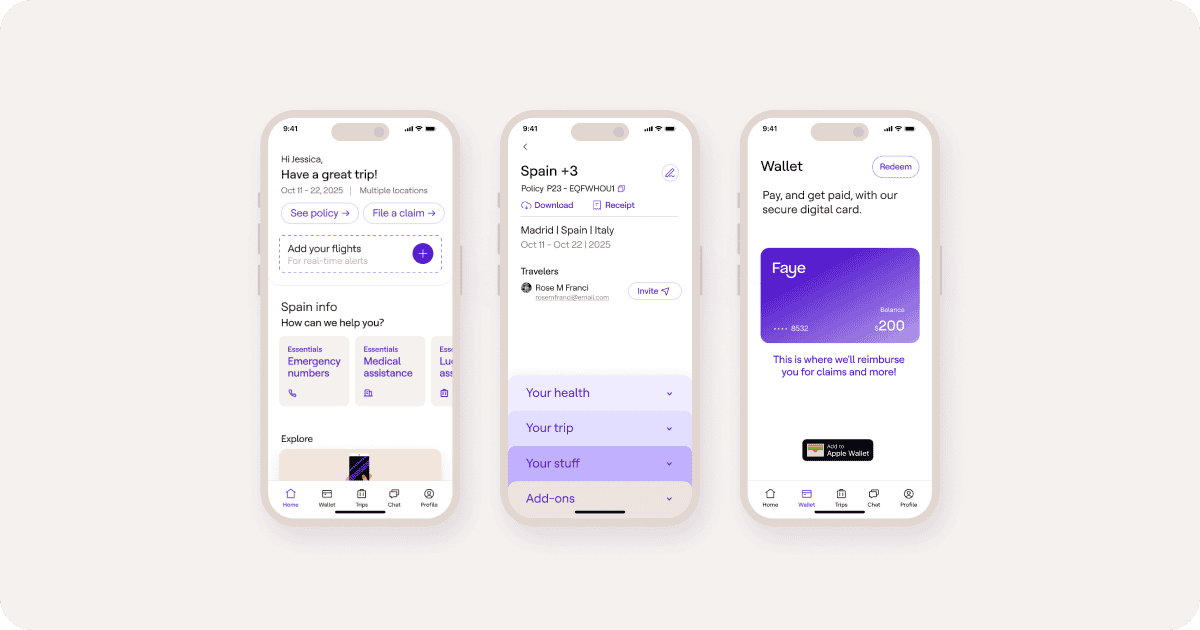
If your trip is affected, you can file a claim directly through the Faye app.
Step 1: Gather your documents
- Trip details such as flight itineraries or hotel bookings
- Physician documentation explaining the medical reason for your cancellation or interruption
- Proof that you qualify for the pre-existing medical conditions waiver
Step 2: File your claim
- Open the Faye app
- Select your trip
- Tap File a claim
Step 3: Share the details
- What happened
- When it occurred
- Supporting documents or photos
Step 4: Submit and track
Once submitted, you can follow your claim status in real time in the Faye app and receive updates along the way.
Tips for traveling with a pre-existing condition
Traveling with a medical history doesn’t mean taking on more risk. It just means preparing a bit more intentionally.
Here are a few things to keep in mind before your trip:
Purchase your policy early
If you’re planning to rely on a pre-existing conditions waiver, timing matters. Purchasing your policy within 14 days of your initial trip deposit is typically required to qualify.
Be clear about your health status
You don’t need to submit medical records when purchasing travel insurance, but understanding your condition and whether it has been stable can help you choose the right coverage.
Know your lookback period
Most policies use a 180-day lookback window. If your condition was treated, evaluated, or changed during that time, it may be considered pre-existing unless you qualify for a waiver.
Keep important information accessible
Bring a simple summary of your medications, allergies, and your doctor’s contact info. You can store these details securely in the Faye app for easy access anytime, even offline. If you need care abroad, having everything on hand can save time and help you get support faster.
Review your coverage before you go
Take a few minutes to understand what your plan includes, especially around medical coverage, trip interruption, and emergency assistance. Knowing this upfront makes it easier to act quickly if something comes up.
Travel protection that fits how you actually travel
Travel insurance should support you throughout your trip, not just after something goes wrong. With 24/7 human support, digital claim filing, real-time updates, and approved reimbursements sent straight to your phone’s wallet, Faye helps you handle the unexpected without having to figure it out on your own.
Make your next trip memorable—for all the right reasons.